
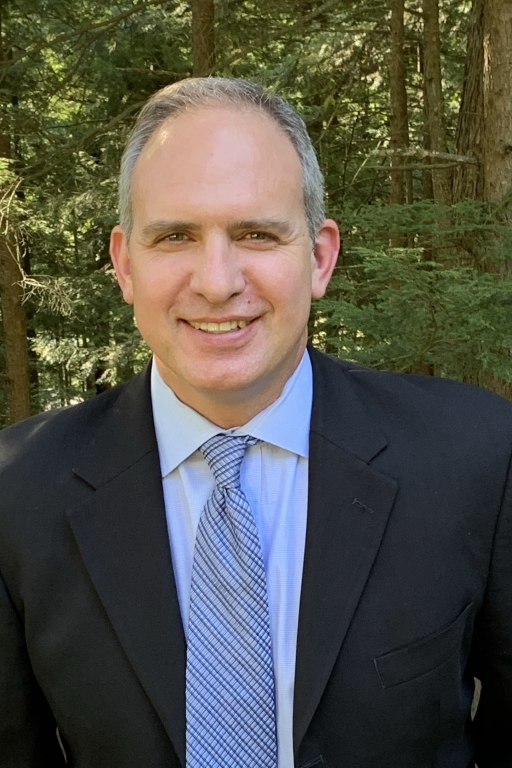
We at The Review love to recognize great professors throughout Dartmouth’s campus every year in our Freshman Issue, where we release an annual report of the College’s best professors. Seldom does that list change until we find a candidate worthy of support. This year, we have made two major additions by adding Senior Associate Director of the Rockefeller Center, Herschel Nachils, and Rockefeller Center Executive Director, Jason Barabas ‘93. We sat down with Professor Barabas to ask him about his time coming from Dartmouth as a student all the way around to leading one of the key centers at Dartmouth.
It was a pleasure to sit down with Prof. Barabas and hear about his journey to Dartmouth College and what he has learned from his time at the Rockefeller Center for Public Policy. Professor Barabas offered a compelling statement about the necessity of the Rockefeller Center as an institution, and I walked away even more glad that I became a government major.
We began our conversation with a biographical history. Barabas grew up in the Midwest and played football at Dartmouth, recruited to the Big Green football team. He mentioned the late Buddy Teevens ‘79 as a significant influence on his decision to attend Dartmouth. He talked through his recruiting journey and marveled at the visit paid to him at his home by Teevens.
After graduating from Dartmouth, Barabas worked for a time in Illinois politics, serving as a senior advisor to Governor Bruce Rauner, a Dartmouth Class of 1978. Barabas, while describing this moment in his career, encouraged Dartmouth students to, if they can, work in politics for a time, describing it as a highly influential force in his decision to enter academia. Barabas went on to earn a Ph.D at Northwestern University and Post Doctoral Fellowships at Harvard and Princeton, where he completed both the Robert Wood Johnson Foundation Scholar in Health Policy Research and the Center for the Study of Democratic Politics, respectively.
Barabas is teaching a class this term on Rockefeller Republicans, the brand of Republicanism named for Vice President Nelson A. Rockefeller, a member of the Class of 1930. Barabas, in describing his passion for this class, cited the fact that far too few Dartmouth students know the history of the man for whom Rocky is named, and he described his brand of leadership and knowledge as shining examples for any student of political science to follow. Learning through his class, his passion for the subject is deeply evident – he says he has been planning this course for years. He has brought in a myriad of speakers and has plans for far more.
When asked about his teaching philosophy, Barabas put it eloquently: the goal of Rocky is to teach students not what to think, but rather how to think, describing the center as something beyond just a center for the government major, but also as a tool that all Dartmouth students should expose themselves to, at least once during their time at Dartmouth. He mentioned that almost all Dartmouth students, given that they are here for a four-year undergraduate degree, will experience the entire four-year election cycle during their time at Dartmouth: they’ll see the midterms, the presidential elections, the off-cycle years, the primaries, and everything that comes with it. Barabas praised the Rockefeller Center as a place where Dartmouth students can successfully navigate the complexities of the American political system with all of the resources possible.
Barabas’s term was recently renewed for another five years. When asked about his vision for the next five years, he cited the need for a renovation of the Rockefeller Center, a continuance of the ideological diversity of speakers and visitors, and a desire to make the Center more accessible to students of all areas of study.
As a student of government and, thus, someone very familiar with the Rockefeller Center, I have the utmost confidence in the Center’s continued leadership and guidance on Dartmouth’s campus under Professor Barabas’s leadership. We at The Review are proud to add him for his vision and commitment to providing ideological diversity to a largely homogeneous campus. Every class I have taken, every professor that I have had, every program I have partaken in, has more than exceeded my expectations. I, for one, cannot wait to see what comes next for the Center as it begins to navigate the new political climate in the second Trump era.
Be the first to comment on "A Conversation with Jason Barbaras, Director of the Rockefeller Center"