
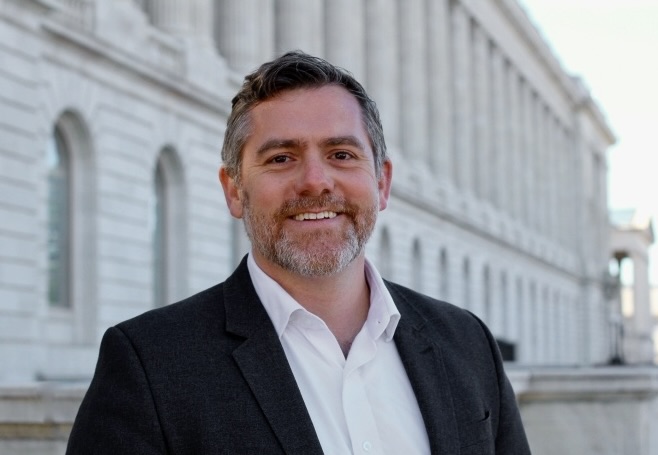
Matt Raymer ’03 has recently accepted a position as senior vice president and general counsel for the College. He brings to the job over a decade of legal experience working on federal cases and cases in state courts across the country, and most of his work has centered around the field of election law. What makes that legal experience especially distinctive is the fact that several years of his career have been with various departments of the Republican Party, including two years during which he served as Chief Counsel for the Republican National Committee. This has prompted a significant amount of on-campus discussion regarding the extent to which his experience indicates the approach he will take to his position at the College; liberal students have also expressed significant discontent regarding the strength of his affiliation with the GOP.
If Raymer is viewed in comparison to his predecessor, the political character of his experience is not unusual. Sandhya Iyer recently left after seven years at the College, and she is every bit as much a partisan as her successor – her politics are just more palatable to the rest of the Administration. Among the chief reasons behind her pursuing a position at Brown University (according to an interview with The Brown Daily Herald) is Brown’s perceived status as “a leader in diversity, equity and inclusion.” Her enduring allegiance to DEI policy despite its decreasing prominence in corporate America and its falling popularity among Americans already reveals a leftward lean, but the fact that she considers it to be among the most important factors in her evaluation of an educational institution reveals a significantly disordered focus and a sharp left-wing bias. In her various positions before working in higher education, she engaged in legal advocacy for restructuring and “reforming” prisons, placing more oversight and burdensome regulations on police departments, and fighting abortion restrictions: these are certainly politically contentious causes to which many Americans object. Finally, she articulates her overall philosophy as “constructive irreverence,” which signals an anti-conservative attitude with a significant degree of disrespect toward the traditions which guide historic institutions.
There is thus precedent for the position of general counsel to be filled by an individual with strong and public political views, although Raymer’s views will be a significant departure from Iyer’s. Unlike his predecessor, Raymer will be subject to the recent Institutional Restraint policy (since the general counsel is a named individual to whom it explicitly applies). Any political statements he makes going forward, especially those which resemble his article in The Federalist regarding birthright citizenship (which has led to significant amounts of discussion on campus), will thus be made in his personal capacity alone and not in his capacity as a representative of the College.
Placing a conservative on the Dartmouth Senior Leadership Team does signal a greater commitment to ideological and viewpoint diversity. It is worth noting, however, that Raymer will become one of twenty-three who sit on that committee, which somewhat limits his potential impact on the President. The greatest benefit to the College in that regard would come if his presence attracts more faculty who are interested in offering students perspectives beyond the tired liberalism which characterizes so much of the College’s offerings. If a shift in hiring of this sort were to take place, it would represent a reversal of the rapid trend towards an increasingly liberal faculty which is currently ongoing. According to OpenSecrets, which tracks political campaign contributions, in the 1996 election cycle 9% of donations from Dartmouth faculty to candidates seeking federal-level office were received by Republicans. This share fell to 5.5% in 2016, and in 2024 Republican candidates only received around 1% of contributions. The change in faculty ideology presented by Raymer’s employment is thus small considering the overwhelmingly lopsided environment into which he is entering, and he would still be fighting an uphill battle to challenge dominant attitudes.
This term, he has been teaching a course on Election Law (GOVT 81.30/ PBPL 82.11) which will enable him to impart the wisdom he has gained over the course of his years practicing election law at the highest levels to a new generation of students. However, he will be teaching as a “lecturer,” not a tenure-track professor, which means that it is difficult to state with certainty how often he will teach in upcoming terms. His class is the only place where he has direct power over curricula: most of his powers as general counsel are outward facing. Representing the College in legal disputes and negotiating contracts on the College’s behalf can have significant impacts on student experiences, but they do not determine the course content of Dartmouth classes. He does provide the President and Provost with “legal and strategic” advice, but this will have only indirect influences on what students learn. For his conservatism to have a significant effect on students, it would need to work its way into more courses: William F. Buckley Jr. observed in his seminal work God and Man at Yale that a student’s “disciplines and values will be got from the hours […] spent in the classroom and with his books.”
The legal advice he will provide is likely to help prevent the Trump administration from restricting the College’s funding in a significant capacity. However, it does not appear to be the case that Dartmouth was at significant risk of losing funding in the first place. Columbia was targeted for allowing campus unrest to spiral out of control to such an extent that the fulfillment of the school’s academic mission was impacted, which cannot be said of Dartmouth. Dartmouth has not thus far received a federal antisemitism investigation, which (saddeningly) makes it quite unique among its Ivy League peers. Neither is the College currently subject to a more general discrimination investigation related to admissions (like Yale and Cornell). Certainly, Raymer may caution against adopting new proposals which would prompt responses from the Trump administration, but it seems unlikely that he will be able to suggest significant changes in good faith to policies currently in place which are aimed at preventing pressure from President Trump (as much as he may like to see changes himself for other reasons).
Besides teaching his class, he is most directly connected with students through his oversight of the Office of Visa and Immigration Services. It is likely that he will take this in a more conservative direction, but this is only likely to seem shocking because of the existing department’s stances. To this point, the College has encouraged illegal aliens to apply with the promise of resources and assistance; simply complying with federal immigration law would be a departure from the existing policy. In the past few years, Dartmouth not only spearheaded a campaign to eliminate the accurate legal term “illegal alien” from the Library of Congress subject headings; it produced and funded a self-congratulatory documentary about it called “Change the Subject.” Perhaps Raymer’s employment is a symbolic means of demonstrating a course-correction to the alumni and the Trump administration away from such radicalism. It would be difficult to imagine projects of that sort continuing, but one can also question the extent to which that meaningfully impacts student experiences.
One would expect Raymer to be sympathetic to the argument that foreigners do not have the same right to remain in the country that American citizens do, and thus one would not expect him to oppose visa revocations conducted at the Presidential administration’s discretion. However, OVIS under Raymer’s command began providing legal resources to contest two recent visa revocations, which seems broadly in accordance with how it would have been conducted under the previous general counsel. This suggests a less significant departure from previous OVIS policies than Raymer’s track record would indicate that he would be likely to pursue.
In general, Raymer is likely to do a professional and highly competent job, and it is very encouraging that he was hired despite his politics. Increasing the number of conservative faculty at Dartmouth has the potential to enrich campus discourse, and this may potentially be a good sign for future hirings. However, to the disappointment of many conservative students, his individual hiring is unlikely to significantly impact college policies as much as his opponents fear.

Be the first to comment on "Dartmouth Hires RNC Lawyer as General Counsel"