
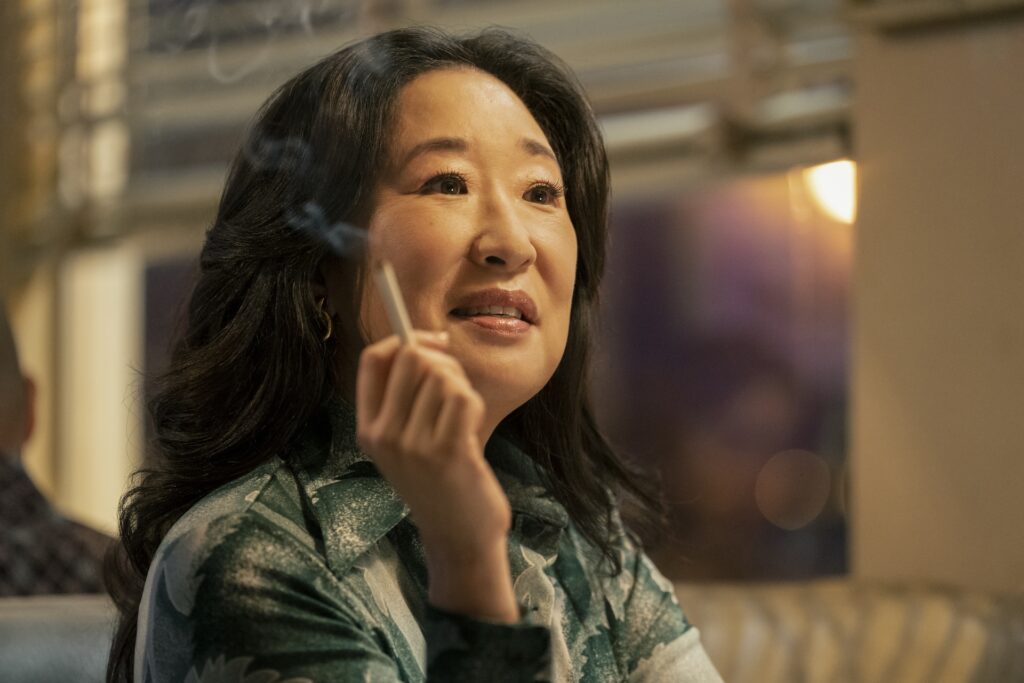
Much has been said about declining standards in academia, its lack of erudition, and its failure to concentrate on its core purpose of fostering scholarship and an appreciation for knowledge. The blame for this deterioration is often placed on students, who are supposedly concerned only with self-aggrandizement and maximizing their financial prospects after graduation, and not with the intellectual development that is the ideal purpose of one’s studies. And yet, the emphasis that Dartmouth’s administration places in its commencement speakers signals, for their part, a similar disregard for intellectual rigor. Moreover, Dartmouth’s choice this year, when considered together with past picks, indicates an acceptance of mediocrity on the part of the administration, and a focus on popular appeal rather than intellectual weight.
Sandra Oh is an actress best known for her role in Grey’s Anatomy, a medical drama notable for its popularity, although its quality is debatable. While generally notable, and popular in certain circles, she is hardly a superstar, and her inclusion will not bring particular renown to the school. Taken in conjunction with the persistent decline in quality of Dartmouth’s Green Key performers, one can see that Oh is yet another instance of our school accepting a decline in general renown.
True, Oh is perhaps not much less popular than many of our previous commencement speakers. Dartmouth’s recent speakers are hardly an impressive bunch overall. Roger Federer stands out as nearly universally recognizable, and you must admit basically anyone who followed him would have been a downgrade. The ones who came before him, though, are hardly household names. At least, however, Lord and Miller, speakers in 2023, or Anette Gordon-Reed, speaker in 2021, were all Dartmouth alumni, and so could speak from a life experience shared with that of their audience. If we cannot get the sharpest minds or the biggest A-listers, we would want to have a Dartmouth alumnus.
Oh, however, has no such affiliation. She is in no way affiliated with the College, and to our knowledge has not even spent significant time in the New England region. The best she can offer is her relationship with Shonda Rhimes, a College trustee and creator of Grey’s Anatomy, Oh’s biggest and perhaps only claim to fame. Aside from general platitudes about entering adulthood, we at The Review do not know what advice she will be able to offer the graduating class, and how her words will be more relevant than those of any other public-facing professional. Last year, Federer’s speech went viral by translating lessons of loss and perseverance in tennis to life. He was also a hit among the student body for his references to pong, something we don’t expect Oh to replicate. His speech was not stale as they often tend to be.
Sandrah Oh is, in all likelihood, an attempt to appeal to the student and alumni demographics whom the current president has irritated with her tough but fair policies. To that end, her choice does seem to have been moderately successful in distracting the perennially-discontent on campus. We must, however, question whether this temporary and likely insubstantial benefit justifies the choice over one more closely affiliated with Dartmouth, or more directly aligned with Dartmouth’s mission as an academic institution. Dartmouth’s choice of a commencement speaker is one of its most powerful tools for affecting its public image. Our choice is widely reported on, and it is a way for the administration to signal its priorities. The President should use that opportunity to signal a renewed commitment to scholarly excellence, rather than persisting in this trend of pop-cultural mediocrity.

Thank God for the review. Dartmouth has become a gigantic morass of mediocrity.