
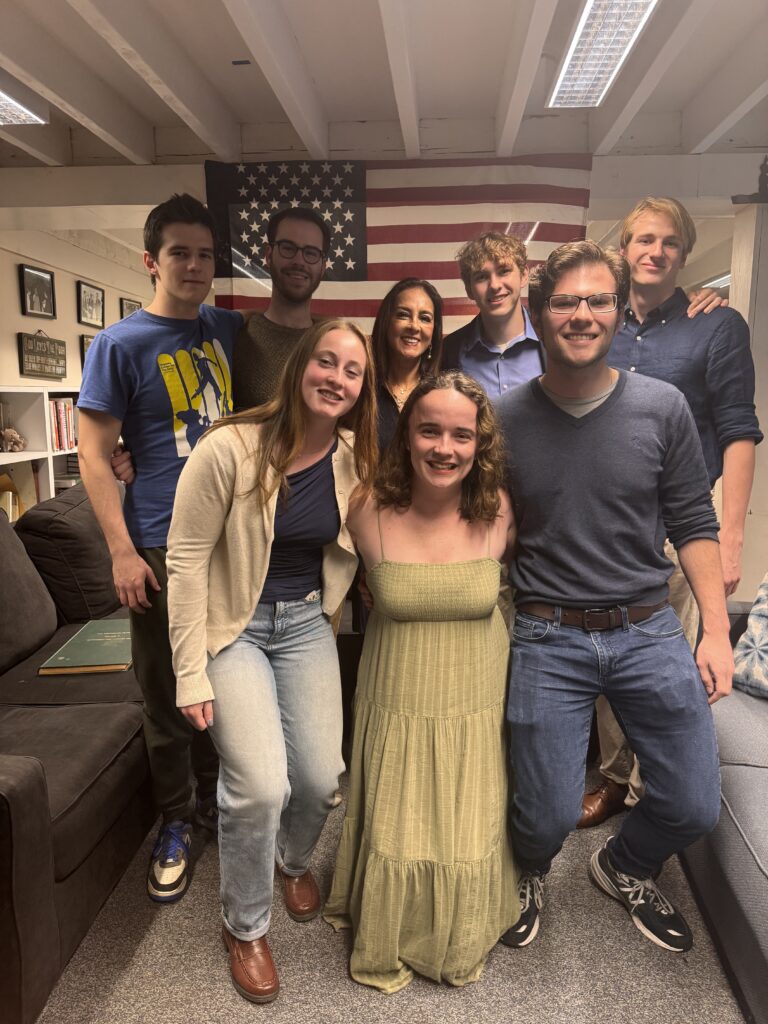
On May 14th, Review alumna Harmeet Dhillon ‘89 returned to campus for a moderated conversation with the Dartmouth Political Union, followed by a series of subsequent engagements with students and staff.
Dhillon currently serves as Assistant Attorney General for Civil Rights, having been appointed by President Donald Trump in December of 2024 and confirmed by the Senate, a role that suits her well, given her long record as one of the conservative legal movement’s most well-known lawyers. Before joining the administration, Dhillon built one of the more impressive résumés in conservative legal circles. She is a constitutional civil rights litigator of considerable renown, founder of the Dhillon Law Group in 2006, Republican National Committeewoman from California, and, in 2023, a candidate for Chairwoman of the Republican National Committee. She arrived at the Department of Justice not as a political appointee learning on the job, but as a seasoned advocate who has spent decades in the arena.
The evening’s conversation was substantive and wide-ranging, centering on the work of her division and the broader state of civil rights law. Dhillon spoke at length about her department’s case announced that morning against Yale Medical School, which stands accused of discriminating against white and Asian applicants in violation of the Supreme Court’s landmark Students for Fair Admissions ruling. Yale, she argued, has chosen to defy SFAA, and her office intends to hold it accountable. Dhillon made clear that her department does not pursue half-measures: maximum penalties for discrimination are the standard, not the exception.
Dhillon proved more nuanced than her critics might expect. When pressed on consent decrees, the legal instruments the DOJ has historically used to address police misconduct, she offered a response that was genuinely illuminating. Her position was not the caricature of reflexive deference to law enforcement that her detractors would have one believe. When one or two officers commit misconduct, she argued, they ought to be investigated, disciplined, and dismissed if the facts warrant it. She argued that these decrees are often ineffective and an undue burden on taxpayers. Furthermore, they are often utilized by law firms with perverse incentives.
Accountability, in her view, is not negotiable. What she objects to is the broad, open-ended use of consent decrees as instruments of federal supervision over entire departments — a concern she grounded not in hostility to accountability, but in skepticism of bureaucratic overreach. She also noted, perhaps surprisingly to some in the room, that she has previously argued against the current expansive definition of qualified immunity, a position that places her at odds with a certain strain of reflexive law-and-order conservatism.
After the formal program concluded, Dhillon spent time with students, Reviewers and others alike. She reflected warmly on her undergraduate years and offered the kind of counsel that only hindsight affords: do everything. Explore every corner of what Dartmouth has to offer. She admitted she wished she had taken part in more, herself.It was a fitting visit, a distinguished alumna, now wielding real power in the legal arena, returning to the place that shaped her.
Be the first to comment on "Harmeet Dhillon Returns to Campus"