
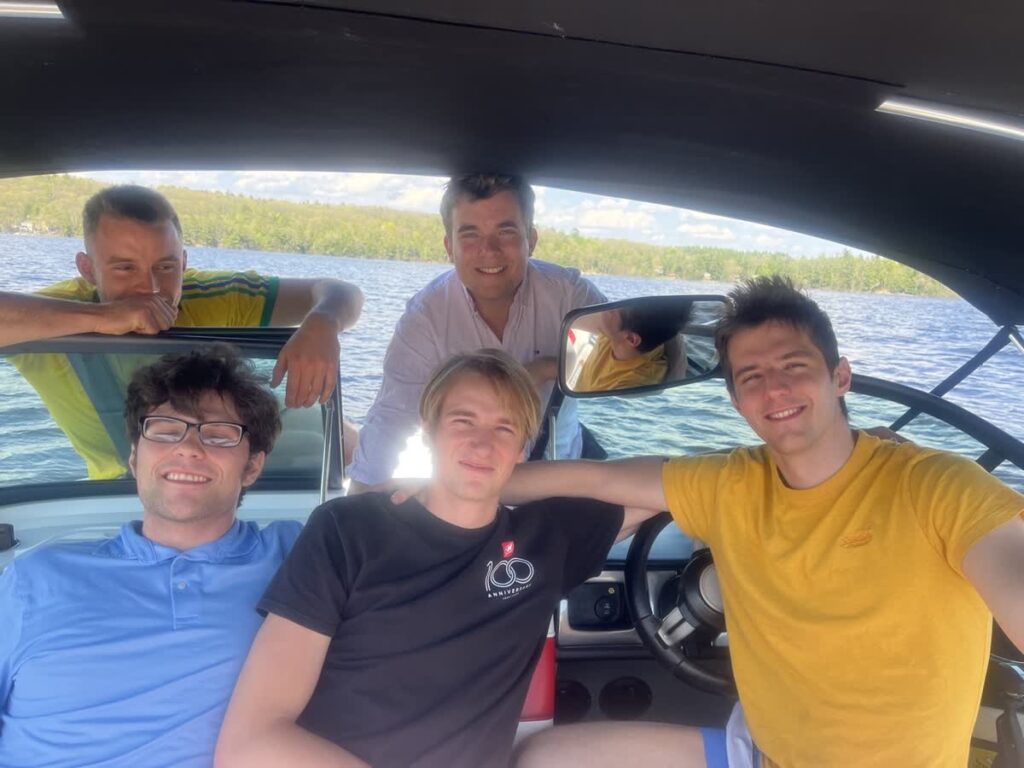
After more than two decades, this spring will see the return of waterskiiers to our campus. The “Dartmouth Water Ski Team” is the College’s most recently approved club sport and has been receipt to palpable student interest. Originally established in 1964, Dartmouth’s former water skiing club operated through the mid-2000s. Given that Dartmouth is a pioneer in outdoor activities among top academic universities, it is past time that the sport sees a return to campus. With this club’s launch, Dartmouth is now the only Ivy League university with a water skiing team. The team will be a part of the Southern & Atlantic Coastal Region. Dartmouth will be the only active team in New England (further reason our school is the best choice among neighboring schools).
The team will begin attending competitions this spring, although the primary tournament season – including the regional and national championships – will take place in the fall. To take part in a tournament, it is essential that skiers bring a positive attitude and pride for Dartmouth. The ability to waterski is mostly optional, however. The team anticipates that half its membership this spring will have never water skied before coming to Dartmouth.
Waterski competitions are sanctioned by the National Collegiate Water Ski Association (NCWSA), which is a part of the umbrella organization USA Waterski and Wake Sports. The sport consists of three disciplines: slalom, trick, and jump. Slalom skiing is typically done on one ski, and it consists of passing through an obstacle course. The goal is to complete the pass by going through two buoys at the start and end of a course, and having to go around six buoys in between. Once you complete a pass, the boat will speed up for the next. If you hit the max speed (34-36 MPH), then, at the end of each pass, your rope is shortened. This continues until the skier fails to complete a full pass. Slalom skiing is scored by buoy count. Trick skiing is similar to wakeboarding, only the board is smaller and lacks a fin. This makes the board feel slippery and allows you to do surface and air turns easily, as well as flips. Trick skiing is scored by points awarded for the successful completion of different tricks.
Jump skiing is done on two skis, and the goal is to launch as far as you can off of a fivefoot-tall ramp while the boat passes to the side of the ramp. To increase distance, the skiers must cut to the ramp with more force and precision. The measurement is of distance, not height. Most beginners will have the boat pull them at 20-24 MPH and travel around 25-35 feet. Some of the best collegiate jumpers will have the boat travel at 32 MPH and soar upwards of 170-190 feet. While the boat may only be traveling at 32 MPH, the skier could be cutting to the ramp at 50-60 MPH. This spring, the team will travel to Atlanta for its first tournament. As for the fall, while the location of the regional championship has not yet been announced, the upcoming national championship will take place in Sacramento, California. Students of all skill levels who are interested in the team should reach out to vito@dartmouthwaterski.org or DM the team on Instagram: @DartmouthWaterSki.

Be the first to comment on "When the Lake Thaws: The Return of Water Skiing to Dartmouth"