
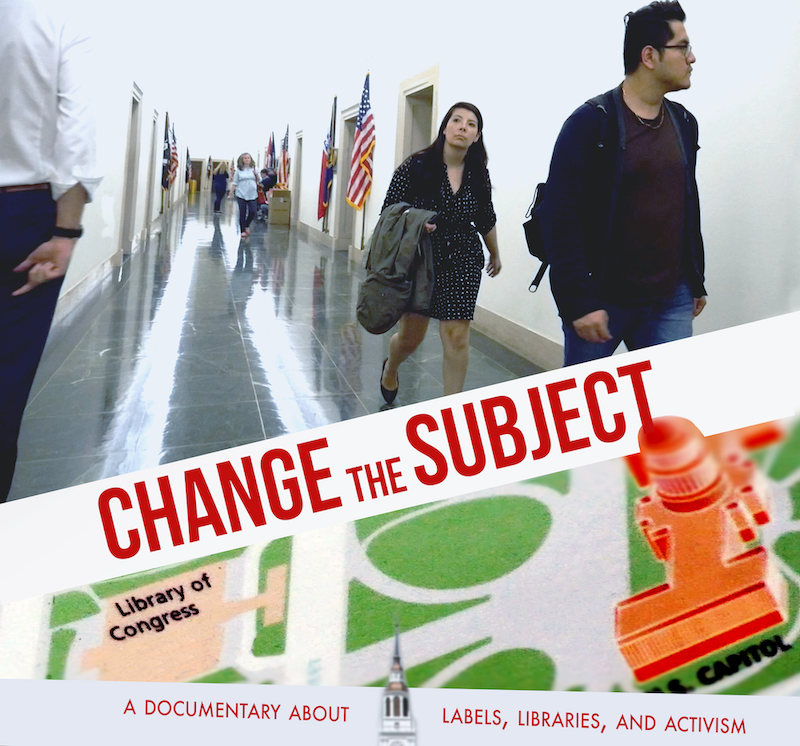
Last term, I had the privilege of watching “Change the Subject,” a film directed by Dartmouth’s own librarian, Jill Baron. It is a 2019 documentary that follows a group of Dartmouth students who attempted to lobby the Library of Congress to change their indexing from using the term “illegal aliens” to “undocumented immigrants.” I was required to watch this film for my Spanish class. Ms. Baron even agreed to meet with our class and discuss the film.
In my experience at Dartmouth in the Government and Spanish departments, I am pleased to report that blatant liberal indoctrination is not nearly as common as I imagined it might be at an Ivy League university. This particular classroom experience was the only time I have observed a relevant political discussion in which it was expected that the progressive narrative be dogmatically accepted.
On the surface, Ms. Baron’s film and our class discussion might have intended to attack what my professor, the students in my class, and Ms. Baron consider to be “insensitive” language. However, the progressive movement – as is highlighted by Ms. Baron’s efforts – is not trying to change language to reflect the changing times. Rather, it is seeking to change neutral terminology in order to actively facilitate progressive change. I argue that Ms. Baron and her group of students sought to change the term “illegal alien” because they want to change our fundamental understanding of what it means to be a U.S. citizen. This effort was not done as a reflection of a cultural change that no longer sees certain terms as appropriate. Instead, it was done to seek control and influence over an ongoing cultural debate.
Both the terms “illegal” and “alien” face scrutiny. However, neither term can truly be considered anything but accurate legal descriptors. This is especially true for the term “illegal,” as it is a very basic adjective. After all, “illegal” is not a cultural term nor can it become outdated per se (as hypothetically the term “alien” could be). As defined by Merriam-Webster, it merely describes a thing that is “not according to or authorized by law” or “contrary to or in violation of a law.” When referring to any sort of migration or immigrants who reside in the U.S., contrary to the nation’s laws, “illegal” is accurate. The “I-word” – as the movie labels it – is here to stay.
If “alien” changes to something else like “immigrant” or “noncitizen,” it is less important. However, there is no real need to change this term. After all, it has and continues to be used in non-pejorative contexts to merely describe a person who is “relating, belonging, or owing allegiance to another country or government” (Merriam-Webster). This description of “aliens” is accurate. Of course, progressives do not seek to change the term “alien” because there is a culturally updated way to refer to a person as “relating, belonging, or owing allegiance to another country or government.” Rather, progressives seek to eliminate the term “alien” as they do not believe that we ought to consider aliens in the U.S. as “relating, belonging, or owing allegiance to another country or government.” By doing so, society implies that not everybody is entitled to American citizenship.
Returning to the qualms the film has against the term “illegal,” the film argues this term is racist. However, having an immigration system that draws the line between illegal and legal immigrants is the least biased or racist system that could exist. Of course, the left does not like the term “illegal” as it implies rule breaking, but rule breaking is the thing that is inherently biased toward some peoples. Without “illegal” immigrants, there would be no fair system of immigration. What this would mean is that Africans, Asians, Europeans, etc. would be systematically disadvantaged as opposed to Hispanics, who can more easily migrate to the U.S. Under a closed border and an immigration system which deports those who illegally entered the country, then people from all across the world seeking a better life in America are being equally with regard to immigration processes.
Another comparison the movie makes in an attempt to discredit the accurate legal term “illegal” is that a student is not considered an “illegal student” if they have a sip of alcohol before turning 21. It is true, there is no such thing as an illegal human, and in this context a student who has a sip of alcohol under 21 is not an “illegal student.”. However, there are such things as illegal immigrants and certainly illegal drinkers (as would be considered a student who consumes alcohol under 21). If someone were driving a car on the road without licensure, they would likewise be considered an “illegal driver.” Many progressives do not seem to understand that nouns like immigrant, human, and drinker refer to different categories of beings and that different adjectives can apply to each of them. This does not make an illegal immigrant any less illegal.
As the term “illegal” simply reflects a basic concept that laws are being broken, in order for an immigrant to not be considered illegal, as the left would like, the solution that this paradox naturally marches toward is a redefining – not of basic terms – but of the laws themselves. It is evident that reflected in this discussion is a desire to change the laws that might consider any immigrants illegal. After watching the film, I was genuinely struck. It is easy to identify what the end goal of this silly semantics argument is (to redefine our understanding of American citizenship). But this end goal is perplexing, and I cannot seem to understand why the left believes my country does not have the right to self-government as does any other. Why can there be no such thing as an ‘American citizen’? Why can we not have a fair immigration system as any other country has? Just because immigrants desire to come to the U.S. over other nations does not mean we ought to not have our own procedures. Obviously, I understand why Democrat politicians push for this. It empowers them, and power is an understandable end. But I am perplexed by the Jill Barons of the world, not the corrupt politicians. I am conscious of the influence immigrants have had upon this nation as my greatgreat grandparents came to this nation from Italy. However, this fact about America’s history does not make clear why this must mean that anyone who happens to sneak into this country has a right to be here and be considered a citizen.
All I learned from the film and our discussion is that “illegal alien” must be changed and that it is a “politicized term.” It would make sense to have legal terms that reflect reality, not politics. However, perhaps the progressives are the ones downplaying a legally straightforward term for a political agenda (i.e., changing our understanding of what a U.S. citizen is or ought to be understood as). I did learn one more thing, I might add. When asked if Ms. Baron or the students who lobbied the Library of Congress faced any pushback from students on campus, she responded that there was virtually none, with the exception of some students at The Dartmouth Review. God bless The Dartmouth Review!

Be the first to comment on "Change the Channel: A Review of Jill Baron’s “Change the Subject”"