
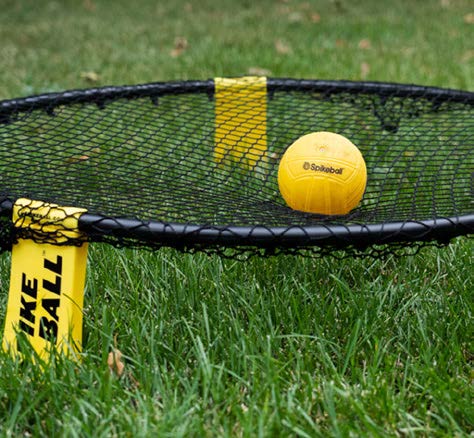
Sprung more than seeing the Green sprawling with the liveliness and spirit of Dartmouth’s student body. Nothing brings a smile to my face more than witnessing this spectacle whenever I emerge from the entrance of Baker Library on a Friday afternoon. This picturesque scene would be incomplete without mentioning the many activities and games that bring this energy. Among the most popular include pickup volleyball matches, the classic hacky sack circle, and by far the newest addition to the scene, Spikeball.
Anyone who has seen the game of Spikeball played knows just how unique it is, though at first glance it seems to be a strange variation on the sport of volleyball. In Spikeball, four players surround the net in teams of two with the goal of spiking the ball onto the central net such that the opposing team is unable to return it.
The game was originally invented by American toy maker Jeff Knurek in 1989, where it was then marketed by the Japanese company Tomy. It wouldn’t be until current CEO Chris Ruder, graduate of Marquette University, revitalized the company in the early 2000s that the game would take off and reach unimaginable heights. On a trip to Hawaii in 2003, Ruder was introduced to the game as he played on the beach using a friend of his brother’s old set.
It wasn’t long before Ruder performed some market research and acquired the expired trademark for $800. He later received a patent for his new and improved hardware and design. In 2008, Spikeball Inc. was founded in Chicago, not far from Ruder’s home city of Kankakee. Pivotal to the game’s explosion in popularity was its appearance on Shark Tank in 2014, where Ruder narrowly escaped relinquishing 20% of the nascent company to Daymond John after the accepted offer fell through, allegedly due to differences in the direction and strategy of the company going forward. While impossible to know in the moment, I am sure Ruder is pleased that things worked out the way they did.
There are many factors that contribute to the game’s massive popularity on Dartmouth’s campus, among them the game’s flexibility, low barrier to entry, and community-oriented nature. Spikeball’s flexibility means it can be played in a wide variety of settings and is suited to the desires of vastly different groups. With a clever design allowing the full set to be broken down and fit into a simple drawstring bag, the game is exceedingly portable, facilitating its integration into the incredibly busy life of a student navigating the Dartmouth ten-week term.
Moreover, this flexibility transcends the game’s logistical transportation. Whether you are the laid-back type who prefers to unpack the latest campus drama with a Keystone in hand or the locked-in competitor who revels at the opportunity to drop shot your opponent when they least expect it and goes diving into the grass to save an errant set at a moment’s notice, Spikeball can be your game.
This flexible nature to the game contributes to the relative ease with which new players can pick it up, an undoubtedly significant contributor to its proliferation across the Dartmouth Green and college campuses nationwide. All that it takes to begin playing is a little hand-eye coordination and a willingness to put yourself out there by pushing through the struggles of initially finding your bearings.
This advantage of Spikeball makes it very similar to another up-and-coming sport popular on Dartmouth’s campus that has recently taken the world by storm. Love it or hate it, pickleball’s explosion in popularity – catalyzed by the global pandemic in 2020 – can partially be attributed to its low barrier to entry as indicated by its appeal to athletes young and old alike. There are many interesting parallels between the two sports and there is much Spikeball could learn from pickleball’s rise to the mainstream, but what is apparent from both is that a sport’s low barrier to entry can be a powerful factor in its widespread adoption.
Lastly, Spikeball’s community-oriented nature only serves to magnify all of what has been mentioned above. Epitomized by even the net’s circular shape, the playing field is seamlessly integrated into the surrounding location, in Dartmouth’s most common case the Green. Say goodbye to right angles and fenced-off courts; Spikeball’s 360-degree arena is mother nature herself.
Combining the best aspects of many different sports, I believe Spikeball’s appeal is here to stay and will only increase as the years progress. The once-a-term intramural sports Spikeball tournament set to take place on Sunday, May 18 provides a much-needed outlet for Dartmouth’s more competitively inclined players to get some skilled games in while also the chance to meet other like-minded players. As the weather continues to improve and students spend more time outside in the sun, there’s no doubt that Spikeball nets will continue to scatter the Green, each a hub of community and good times.

Be the first to comment on "Spikeball Fever: Casual Sports and Good Times on the Green"