
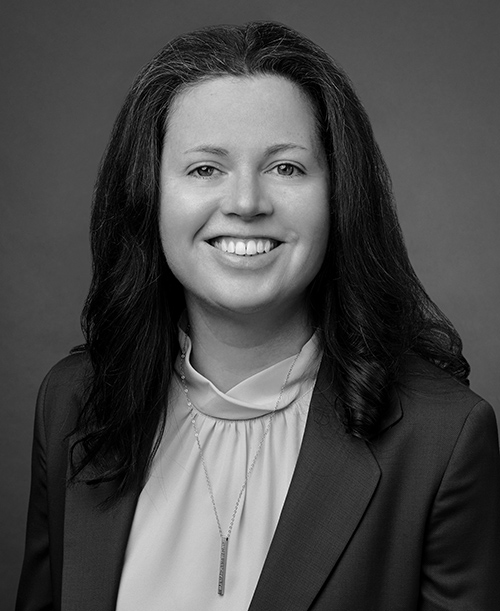
On Thursday, April 2, The Honorable Beth W. Jantz from the Dartmouth class of ‘99 returned to Hanover as a part of the Rockefeller Center’s Law and Democracy speaker series to share her story since attending the College on the Hill and her voice on topics relating to criminal justice as a current U.S. Magistrate Judge for the Northern District of Illinois. Coinciding with the United States’ 250th anniversary, the Law and Democracy series hopes to encourage students to critically engage with today’s political issues and to reflect upon the nation’s history up until this point. Engaging with experts in their area of expertise is an integral component of the effort, providing students and faculty of the college alike a unique opportunity to directly explore ideas covered in the classroom and to see them applied in the broader context of the nation and the world.
Judge Jantz began her career as a law clerk for the 7th Circuit Court of Appeals, which encompasses courts across the states of Illinois, Indiana, and Wisconsin. However, a large portion of her career in and around the courts was spent as a public defender—a position she had for around 11 years— until her eventual appointment to the bench in 2019. She has served as the Magistrate Judge for the Northern District of Illinois ever since.
At the District Court, Judge Jantz has played an instrumental role in helping to run a pretrial diversion program for criminal defendants. The program is called SOAR (Sentencing Options that Achieve Results) and is designed as a fundamentally therapeutic alternative to incarceration for eligible individuals charged with felonies. Programs such as these can be controversial for many reasons, chiefly among them the question of their effectiveness. Despite potential concerns from those who wish for more punitive alternatives in incarceration, SOAR bodes an impressive 0% arrest rate for new offenses among graduates three years post-program, saving the state significant amounts of money in the long run.
In a touching moment towards the end of her talk, the magistrate judge explained how she hardly ever sees graduates of SOAR after their time with the program, but that ultimately this is a good thing because she hopes participants move on to bigger and better times in their lives. She recognizes that people make mistakes and that SOAR can be a pivotal experience in a former criminal’s life, a necessary stepping stone to launch them to future success. Like the rocket boosters of a space shuttle that are discarded once they are no longer needed, participants’ time in SOAR can help propel them to new heights, but only after they finally leave the program behind and reintegrate into society.
While there were many fascinating sub-topics discussed during the talk within the umbrella of criminal justice, one audience question regarding AI seems particularly pertinent to the current atmosphere we find ourselves in today. The question was posed in a relatively simple manner, simply asking Judge Jantz her thoughts on the rise of new AI tools with the capacity to statistically estimate which individuals are most likely to reoffend in the future and their increased use in the courts. The answer was surprisingly definitive in opposition, as Judge Jantz explained her suspicions about removing humans from the loop that makes critical, oftentimes nuanced decisions about individuals, decisions with the potential to irrevocably alter the trajectory of their path through life. Drawing on knowledge of the latest transformer models, she explained how their operations present a black box to citizens who are unable to determine their validity or not. She also touched on a theme explicated in detail during the talk by Professor Latanya Sweeney of Harvard University this past January, namely the dangers of implicit biases within these AI models (article titled “Latanya Sweeney on the Technocracy” from the January 2026 TDR issue). The general idea is the following: if AI models are calibrated based on training data gathered from across the internet that is already biased or skewed in some way, the models themselves are bound to inherit these problems completely unconsciously by the nature of their very programming. Ultimately, Judge Jantz believes that without more general insight into the inner workings of these models, law makers, judges, and others in the criminal justice space cannot in good conscience use these tools, at least not yet.
This sentiment of Judge Jantz’s regarding AI hints at a larger aspect of her belief system that permeated many of the talk’s topics of discussion—namely, that of complete dedication to helping others no matter the scale. She shared a poignant story about a small child at the beach picking up washed ashore starfish one by one and returning them to their aquatic home among the waves, only for an adult to comment on the activity’s pointlessness because of the infeasibility of actually saving them all. Judge Jantz believes her background as a public defender helped her truly gain the ability to put herself in others’ shoes, instilling in her a stalwart commitment to bringing an individualized approach to every case and eschewing the temptations of adopting a cookie cutter, copy-paste approach. She constantly remains mindful of the profound impact her sentencing has on the lives of others, and strives to remain constantly grateful for the position she finds herself in today. Her thoughtful and intentional approach to criminal justice speaks volumes to the value of having an open mind and an empathetic heart, and we could all stand to emulate her more in her dedication to living by the credo that “every star fish matters.”
Be the first to comment on "Judge Beth W. Jantz at Dartmouth"