
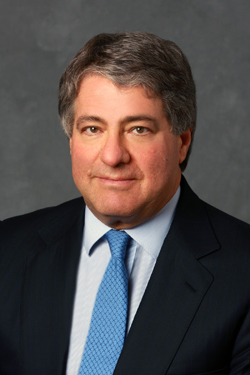
When asked about Jeffrey Epstein’s prosecution for soliciting sex from a minor in 2024, Leon Black ‘73 had a ready answer: “I mean, he was with a 17-year-old prostitute, got prosecuted for it and got put away for a year, I didn’t think this was the end of the world, frankly.” That sentiment, offered to the publication Puck and now part of the public record, belongs to the man whose name appears on one of Dartmouth’s central buildings. The College has declined to comment on whether it plans to change that.
The picture assembled by the New York Times and Bloomberg from newly released DOJ documents is not one of a casual acquaintance. Leon Black paid Epstein a total of $150 million, making Black, by a significant margin, Epstein’s greatest source of income after 2012, years after Epstein was first convicted. Bank of America flagged the full sum as suspicious. Epstein was not merely Black’s financial adviser; he served, according to Times reporting, as something closer to a fixer. He tracked the whereabouts of Guzel Ganieva, one of multiple women who have alleged that Black sexually assaulted them, communicated with Black’s legal team about how best to surveil and silence her, and coordinated meetings between the two. Black has denied the assault allegations.
The timeline is worth sitting with. The initial donation for the Black Family Visual Arts Center was made in 2009. At that moment, Epstein was already a convicted sex offender – and, according to public records, still listed as director of the Black Family Foundation. Dartmouth’s Advancement Office coordinated a major naming gift with a foundation whose listed director was a registered sex offender. The building was formally dedicated in September 2012. During that same year Epstein’s name remained on the foundation’s 990 forms, and he received his first recorded payment from Black — $5.5 million, per congressional investigators. The Black family maintains that Epstein’s listing on the foundation was a clerical error. That claim is widely disputed. In 2003, Black contributed to a book celebrating Epstein’s 50th birthday. His entry, a handwritten poem, referenced Epstein’s “unique tax strategy” and his interest in women: “Blonde, Red or Brunette, spread out geographically / With this net of fish, Jeff ’s now ‘The Old Man and the Sea.’” Black signed off: “Love and Kisses, Leon.”
On April 8th, Dartmouth Student Government and the Student and Presidential Committee on Sexual Assault issued a joint letter calling for the immediate renaming of the building. The letter notes that Epstein, within his capacity as foundation director and personal consultant, advised and helped plan Black’s donations to Dartmouth. “Those donations,” it states, “are a financial scar on this institution.” The letter invokes Dartmouth’s own Sexual Violence Prevention Mission Statement, which commits the College to challenging “the norms that allow power-based violence to persist.” The joint letter concludes that so long as the building bears Black’s name, Dartmouth’s commitment rings hollow. Dartmouth is not the only institution confronting this. Students and faculty at Harvard and Ohio State are pressing for the removal of Les Wexner’s name from campus buildings on similar grounds.
The contrast between Dartmouth’s treatment of Leon Black and its treatment of ordinary students is striking. In recent years, the College has aggressively policed student conduct through expanded Title IX enforcement and disciplinary procedures. Students have been suspended or expelled for far less, deservedly so. Greek organizations have been derecognized for violations of conduct codes. The administration has invested millions in the Sexual Violence Prevention Project, mandatory training programs, and disciplinary infrastructure—all premised on the principle that the College must show zero tolerance for misconduct and protect students from those who would enable it. Yet, when confronted with documented evidence that one of its most prominent donors bankrolled a convicted sex offender to the tune of $150 million, and that this same donor made deeply inappropriate comments minimizing sexual abuse of minors, the administration suddenly discovered boundless patience for “evaluating new information” and declined even to comment on whether the building should bear his name.
This is not an argument about the merits of Title IX enforcement or the proper standard for student discipline. It is an observation about institutional integrity. Either Dartmouth believes that enabling sexual predators is a serious moral failing deserving swift institutional consequence, or it does not. The current posture, strong enforcement against students, and radio silence regarding a donor indicates that the College’s actual priority is not principle, but money. That is a devastating conclusion for a community of stakeholders who have long believed they were investing in an institution that values its integrity, as well as for Dartmouth’s of students and alumni.
Apollo Global Management, the firm Black formerly led, hired the law firm Dechert to review its relationship with Epstein. Dechert concluded that the payments were for legitimate tax- and estate-planning services and found no evidence Black had knowledge of Epstein’s crimes. That finding did not save Black’s position: he was pushed out of Apollo in early 2021. He also agreed not to seek another term as chairman of the Museum of Modern Art. In 2023, he paid $62.5 million to settle an investigation by the U.S. Virgin Islands attorney general into Epstein’s financial partners. His representatives described the settlement as resolving the “unintended consequences” of fees paid to Epstein, a characterization that Senator Ron Wyden, who led a separate congressional inquiry, called inadequate, “This report raises questions as to whether there was more at play in the relationship between these two men, potentially including blackmail.”
The Dartmouth Review sought comment from the Advancement Office regarding the due diligence conducted at the time of Black’s gift, the reputational considerations that accompanied it, and whether the College has formally reassessed its position. The Advancement Office and the College both declined to comment. College spokesperson Jana Barnello, in a statement previously provided to The Dartmouth, stated that the College “takes seriously the allegations that have been made against Leon Black” and “continues to evaluate any new information that comes to light.” She confirmed the College has “no current financial relationship” with Black and declined to say whether it intends to rename the building.
“No current financial relationship” answers a question nobody was asking. The questions the Dartmouth community wants to know are as follows: What did the Advancement Office know when it coordinated a naming gift with the foundation Epstein led in 2009? What did “due diligence” look like for a donation of this scale? What has years of “evaluating new information” produced? And why does the College believe its community is owed no explanation, not for the original decision, not for the silence since, and not for the name that remains on the building today?
The Black Family Visual Arts Center sits near the heart of campus. Hundreds of students pass it every day. The name on the building is a statement, whether Dartmouth intends it as one or not. Continued silence is not a neutral position. It is a choice — made repeatedly, without explanation, and apparently without end.
Be the first to comment on "Leon Black ‘73’s Epstein Problem"