
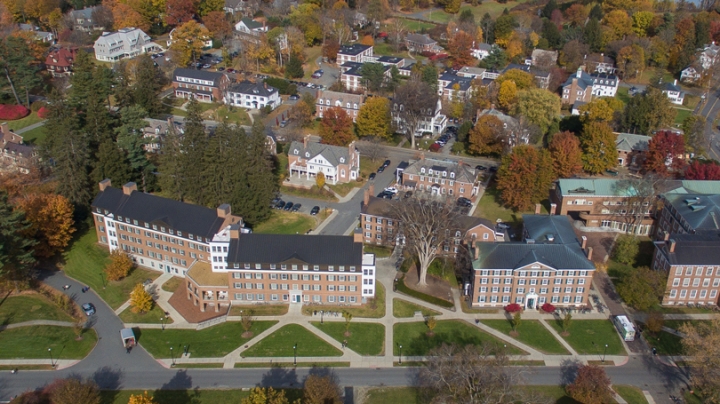
Almost ten years ago, then-President Phil Hanlon began the optimistic experiment of reforming residential life at Dartmouth by establishing the house system. Aimed at establishing continuity and a sense of community, the College randomly sorts incoming freshmen into one of six Harry Potter-style houses, an affiliation students retain (on paper) until they graduate. Unsurprisingly, this artificial friendship building has been a failure, and ten years later, there remains little optimism about its future.
The Office of Communications recently published an article praising the progress of these house communities. The administration exaggerates the role that house staff play in promoting life-long connections between students. In my experience the house community system is plagued most especially by a lack of buy-in. The enthusiastic public relations effort gives the impression that these house communities offer an abundant array of activities and events, but hardly anyone actually takes advantage of them.
We can attribute the irrelevance of the house communities to their contrived nature. Sure, during our first weeks on campus, we are wont to confine ourselves to those in close proximity. That means we prefer the familiar company of our floormates, and naturally (because of the house assignments) we limit much of our social interaction to our houses. For most of us, these relationships are forced, and throughout the duration of freshman year, they dissolve. People gravitate toward friends who share things in common. House communities are forgotten and contribute very little to a Dartmouth student’s identity.
Hanlon intended the house communities to be an alternative to Greek Life. They supposedly provide safer spaces without the corruptible influence of alcohol or the other alleged transgressions that might occur in a chapter room or basement. And yet, fraternities and sororities offer a much more robust source of identity on campus. It is perhaps the third thing one learns about a classmate after his or her name and class year. There are plenty of other clubs and communities on campus, too, that don’t require drinking but are more meaningful than South House. No one asks you what house you’re in when they meet you.
This is because students choose which fraternity they will join based on a number of factors, including the culture of the house and their relatability to the brothers. The methods by which fraternities are chosen are much more conducive to community building. The housing system tries to force friendships that otherwise would not have developed naturally.
Being critical of the house communities is not meant to condemn a culture that is separate from Greek Life. Just as many students find no meaning in their house communities, others have no use for a fraternity. No one, though, is compelled to rush a Greek organization. House communities would be harmless – and thus this editorial would be meager griping – were it not for the restrictive nature of these communities. Most notably, students are compelled to live in a specific building with a person who shares their house identity. Sophomores, for example, must turn away their best friend in favor of a random person, all in the name of relationship building. This is wildly unpopular.
Another key distinction is that fraternities don’t have armies of paid bureaucrats managing affairs and planning events. This house system fabricates responsibilities that are not needed, contributing to the increasingly-damaging problem of university bloat. This coming year, Dartmouth’s tuition will be $91,935, a 4.75% increase from this year. To slow this inflation, perhaps we should downsize less-important positions. I understand that having staff to support students is important, but do we really need this many people to help us make friends?
In a decade, the housing system has done little to achieve Hanlon’s dream of enhancing Dartmouth’s community. Students don’t care about it. Instead of celebrating its anniversary, we ought to put an end to this fantasy and recognize it as a nightmare.

Be the first to comment on "Editorial: A Decade of House Fantasy"