
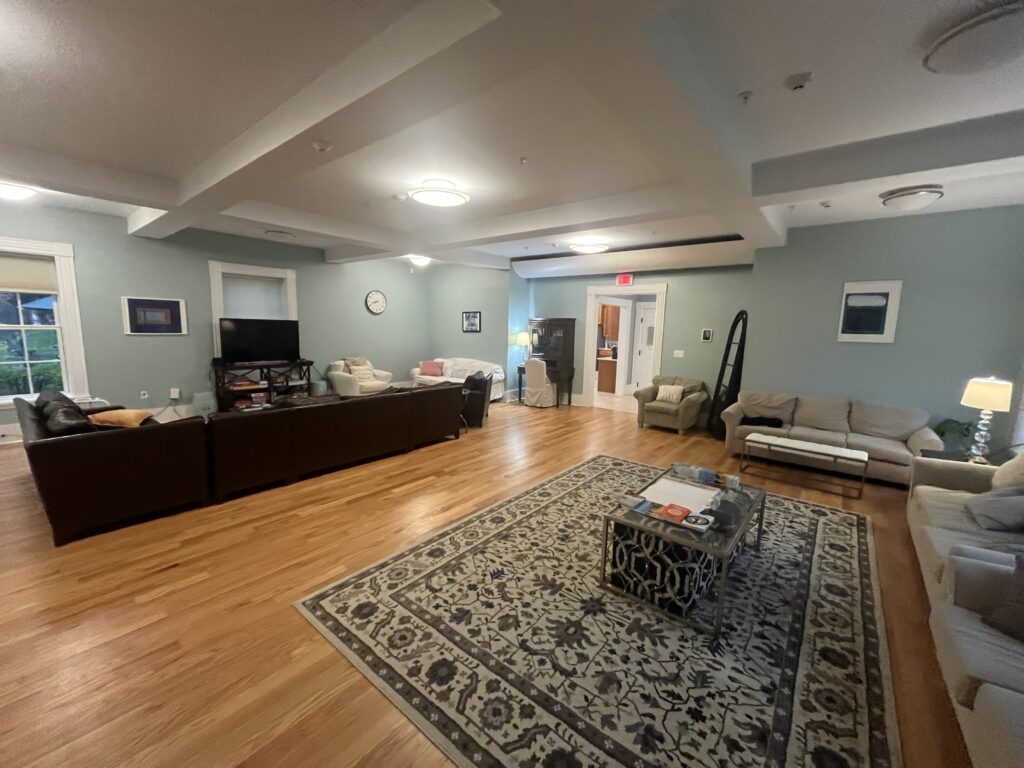
For a highly substantial portion of Dartmouth’s undergraduate population, sophomore fall is the point at which the students in question are divided into the fraternity and sorority houses in which they will spend their remaining years at the College. After all, at that point those students will have had a full year to visit and experience the events the houses have orchestrated while proper membership remained alluringly forbidden. Now that they have the opportunity to fully and properly belong to Greek houses, which are greatly bound up in the social environment of our campus, they seize it notwithstanding the sizable time commitment it entails.
The first three weeks of an average sophomore’s term are accordingly dominated by participating in the rush events each house uses to both entice and vet potential new members. Shakeout and the houses’ offering bids represent the end of a prolonged and intensive process to ensure that students arrive in the houses to which they are best suited.
However, curiously enough, I had the opportunity to settle into a Greek house as a sophomore before the first student within my class was offered a bid, before the first groups of sophomores descended on beleaguered rush chairs to request lunches, and even before the first day of classes. This is because the house in which I took up residence was Alpha Phi.
Of course, the expediency with which this process took place was only made possible because I was invited by the Undergraduate Housing Office rather than by the house’s sisters. The sisters, in fact, had no say in the matter whatsoever: after the disciplinary proceedings surrounding the sincerely tragic loss of Won Jang ’26, their claim to their house was surrendered and their presence on our campus was terminated. At the same time, the significant amount of ongoing construction on residential buildings (particularly the Fayerweathers) has created a housing shortage that the College decided APhi’s house could play a role in helping to solve.
Through my own poor luck with the initial rounds of the housing lottery, I was given the novel opportunity to be among the first men to live in this recently rededicated dorm, which is some of the most unusual housing on campus.
The large kitchen and common area are decorated with a significantly greater attention to detail and sense of passion than any other common room across on-campus housing. The décor was placed with a unified sense of interior decoration born of a genuine sense of belonging: for the women formerly of APhi, this was neither something they were assigned to oversee from afar (as is the case with Residential Operations/Residential Life) nor a temporary dwelling-place through which they briefly pass (as is the case with the average student in a dormitory) but their house. That sense of ownership fed a sense of responsibility and pride. The sisters understood that a sorority’s common areas reflect on its members and they were determined to make that reflection positive; no such pressures exist within conventional dormitories.
The knowledge that the task of cleaning up a mess falls to the house and not to some department of the College helped keep common areas protected. And the members of APhi encountered none of the bureaucratic restraints and required permissions those same women would have encountered if they sought to overhaul a common room in, for instance, Wheeler Hall.
Simply put, they worked together over time to gradually build the sort of house they wanted before their derecognition abruptly cut it short and the building was tossed into the general stock of dormitory housing. This entire situation is epitomized by a half-finished mural—sketched out fully in pencil but incompletely painted—in the basement directly adjacent to the laundry machines. The sisters had plans for another improvement to their house which was painted by and meant for their membership, but it was abruptly halted partway through. It may never be finished.
A score of APhi classes spent decades shaping this house into somewhere their posterity would enjoy, and the fruits of that labor are currently being enjoyed by me and several of my peers pulled from the housing waitlist rather than the sisters’ handpicked successors.
Almost seemingly as a strange joke, the house is officially classified an “affinity house” despite the only genuine uniting factor being our bad housing draw numbers. The College then chose to restrict entry into the building to its occupants alone, which is a minor irritation when its current residents attempt to invite guests, but which more significantly denies APhi’s former sisters the opportunity to even visit the place where they formed close bonds and made important memories. There is a significant probability that keeping these former sisters out of the building was a consideration when making this decision, which begs the question of why it was deemed necessary.
In the process of reflecting on my access to the house, it bears mentioning that too often the preposition bandied about when discussing Greek affiliations is “in”: for example, it would seem entirely natural to hear a man declare that he is “in Sigma Nu” or “in SAE” in everyday conversation. Every day, I sleep, bathe, work, and read within the walls of the building APhi’s sisters once called home. But while I am in the house, it is a crucial distinction to make that I will never be of the house. Every day, I am confronted with clear reminders that the house was not built for me. One example among many is the fact that the permanent, posted signs on all the second and third floors’ bathrooms (where the vast majority of the rooms are located) declare that they are women’s rooms; these signs were hastily corrected with paper signs affixed below indicating that they are now coed.
The side staircase which leads down to the portion of the basement where events were once held is covered in several signs forbidding APhi’s new tenants from proceeding. Those signs accidentally call extra attention to what lies beyond and they contribute to the natural intrigue regarding the room. Both doors to that basement room always remain locked now, but the College’s failure to lock one at the beginning of the term made it possible to ascertain that its character as a sorority basement—complete with a broad array of murals—remains intact. There is something to be said for the fact that the house I now inhabit sits literally atop a room still positively brimming with the character of the former sorority.
Those living in the building are discouraged from referring to it as “APhi”; the College itself opts for “2 North” in all official contexts. Despite this, it remains overwhelmingly known as APhi by its occupants. “2 North” has the issue of seeming unnatural and contrived, but there are deeper problems as well: to deny the building the name “APhi” seems disrespectful to its longtime stewards and it feels like a dishonest and poor reflection of reality.
While the new name may take time to become widespread (if it ever does), the College has been impatiently trying to erase the building’s prior identity as swiftly as possible. While the basement was not repainted, the remainder of the building was, and it was done in such a hurried fashion that there was no time for a primer coat: we are accordingly forbidden from using Command strips lest they remove the insecurely adhered paint. It was thus seen as so unacceptable that the walls be left in their previous state that an incomplete painting job was viewed as preferable.
It is abundantly clear that the office on the ground floor was once the sorority’s library. At the time when I moved into the building, the cupboards and closets contained various items like wall mirrors and instant ramen which had once belonged to either individual sisters or the house. It bears repeating that these former sisters are unable to enter the house to recover their belongings because of the restrictions placed on card access. That the sisters intended to retrieve these items and erroneously believed that they would be able to do so speaks to how swiftly they were thrown off campus, and each item remains a strange reminder of its banished owner.
For those reasons and more, the building strikingly seems to call to mind the idea of a territory which has just been conquered by some invading force. The prominent symbols of the previous occupants were torn down, but this was done quickly and recently enough that the previous authority’s presence lurks in the background. Stark new gray-and-white signage placed by the College intermingles with older signs which were not seen as necessary to remove. Perhaps the single best symbol in the whole house of its transformation are the hooks which completely line both major stairwells. At one time they displayed the sorority’s composites. The composites are nowhere to be found, but the hooks all remain to hint at them.
Perhaps the “conquered territory” analogy is most apt in the context of the College’s prolonged “war” against the traditional Greek system. In 1978 and in 2000 the faculty voted to abolish fraternities and sororities (in the latter case unanimously). Former College president James Wright vowed that “the fraternity and sorority system as we know it now would not survive” his plans in 1999. It took extraordinary student and alumni pressure to defend the Greek system from him. Former President Phil Hanlon ’77 placed an emphasis on alternatives to fraternities and sororities in his Moving Dartmouth Forward Plan. Heightened pressure has been placed on the Administration to alter or abolish the Greek system after the recent negative articles in Rolling Stone and Boston Magazine. President Beilock has generally not been nearly as hostile towards fraternities and sororities as her predecessors, but it is certainly eyebrow-raising that after APhi’s derecognition its house was immediately transformed into a dormitory rather than being the founding site of a new sorority chapter. The Administration has not been as openly hostile to Greek life as it has been in the recent past, but it did quickly accept an easy opportunity to facilitate a net decrease of the number of sororities by one as soon as it had the opportunity. This is felt more acutely since there are significantly fewer sororities than fraternities on this campus: the loss of one sorority alters the environment for women’s rush to a far greater extent than the loss of one fraternity would affect men.
I certainly am thankful that I have the opportunity to live in a building as nice as APhi. I am also extremely grateful that my room in APhi saved me from a dreaded placement into a room in Summit on Juniper. However, it is worth monitoring the Administration for any other potential signs of renewed hostilities towards fraternities and sororities. And it is a fundamentally strange experience to dwell within the ruins of a defunct society.
Be the first to comment on "An Inside Look Into Alpha Phi"