
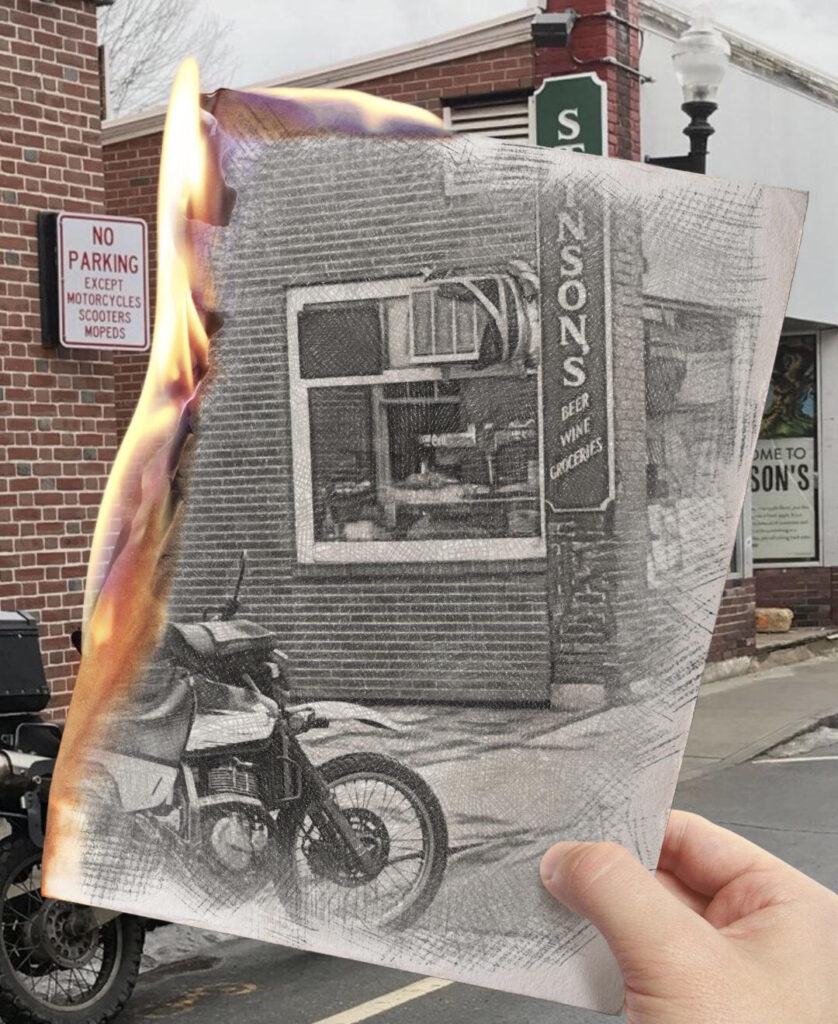
There’s something almost archetypal about Jack Stinson: the small business owner who outlasts trends, corporations down the road, and the slow creep of modernization. His father became the town manager, and later bought the store from Mo Halegan in 1978; five years later when Jack finished school, Stinson began working at the family’s store, the same place he still runs today.
Over the decades, the store has evolved from a bodega to a sort of convenience store with mostly beer, but its essence hasn’t changed. Once the top keg retailer on the East Coast, Stinson’s operation remains grounded in personal loyalty and community connection — and somehow, he says, the margins haven’t changed in forty years. For a man who has lived through nearly every market shift imaginable in this town, Stinson has made adaptation itself part of his business model.
He credits this long-time success to continued loyalty all of these years from “repeat customers” and alumni. He says most small towns like UNH have multiple stores, and Hanover has higher rent. “Without the repeat customers, we wouldn’t be here.” In the early ’80s they sold 50 cases of canned goods, 15 cases of yogurt a week, and the only beer they sold was out of a small seven door cooler in the back. His big change there was when the College decided to add Collis Market, and it quickly changed his business model. He said easily that they had to pick up something new.
The next big force of change for Stinson was the 2015 ban on hard alcohol, which helped him he says. Stinson said he would lose out on 2–3 pallets of beer or softer alcohol varieties. In his words, the brothers of the local fraternities would roll up in their cars for a couple of cases, but most of their cars were already full from the state liquor outlet. The ban forced the Greek spaces to turn to him, where they bought more and more soft alcohol to cope with the ban.
The business changed even further when Brian Bowden instituted the Polar Project, which provided non-alcoholic options for students in Greek spaces. Stinson thought this was a good thing when asked.
Yet, even amidst all of these changes, Stinson still changes his practice to stay afloat by season. When asked whether he changes his buying for Homecoming or for Parent’s Weekend, he answered like someone deeply attuned to the ebbs and flows of life in small town Hanover. The first thing he joked about was Homecoming, with a subtle wink, “You don’t want to run out.” He quickly got back to business and said people now are drinking whatever they want, especially when the adults come back. But these changes are not unique to the older people, they are becoming more important as mainly sororities demand it.
Stinson is so deeply ingrained in the town, he was able to speak to even what we as passersby see as subtle changes. For example, when asked about Allen Street being closed to traffic, he said “that pissed me off.” The former town manager, according to Mr. Stinson, did not actively seek to speak with the business owners in the area. It caused disruptions in buying patterns and traffic patterns, and pushed more people towards CVS and away from local businesses. He talked about the immense impact that has during the summer because, “during the summer there are not that many people who can buy beer at the College.” The road disruption pushed many of the construction workers and eligible alcohol purchasers down away from the local businesses like Stinson’s. He said that was a “serious thing” and could have “put us out of business.” Mr. Stinson talked gratefully about the number of local citizens who signed petitions against this.
Stinson’s is one of those businesses that lasts not through the idea of rapid expansion or buzzwords about business development. The store has lasted all of this time because of decades of steady service with him at the register. Jack Stinson has created constancy with store leadership that has weathered bans, town manager issues, and cultural shifts with a form of pragmatism from long ago. His business is not built on novelty, it’s built on trust — the kind that takes decades to build and seconds to lose. In a town where so much changes with the season, Stinson’s remains.
Be the first to comment on "Stinson’s, A Dartmouth Staple"