
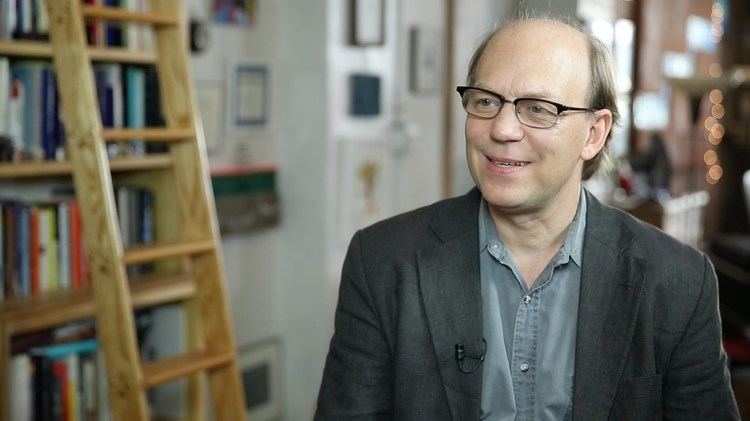
On the 27th of February, Dartmouth hosted a two-hour-long dialogue, labeled “Venezuela, Cuba, and the Monroe Doctrine,” between Yale history professor Dr. Greg Grandin, author of The End of the Myth: From the Frontier to the Border Wall in the Mind of America and winner of the 2020 Pulitzer Prize for General Nonfiction, and Dartmouth professors of Latin American, Latino, and Caribbean Studies Matt Garcia and Jorge Cuellar. Additionally, Ada Ferrer, a professor of history at Princeton, author of Cuba: An American History, and winner of the 2022 Pulitzer Prize for History, was slated to attend, but could not on account of an unforeseen, last-minute impediment. While one may have expected the event to provide topical analysis regarding the recent Monroe Doctrine and arrest of Nicholas Maduro, little was to be found. Instead, the dialogue viewed recent events not through the lens of the United States, but instead through Latin America.
The event’s opening hour consisted of a Grandin-provided public lecture in history. Here are a few of his ideas:
Grandin asserted that modern sovereignty, mainly not fighting expansionary wars of aggression, was developed in Latin America. “A lot of people who date the doctrine of sovereignty, and date a lot of these legal premises, they look to Europe. They look to the Peace of Westphalia in the 1600s, or they look to the post-Napoleonic settlements. But those weren’t nations, those were proto-empires that were fritting about the globe . . . Latin America, [or] Spanish America, it wasn’t called Latin America at the time, really was a series of bounded nations that had to learn how to live with each other. Each nation both legitimated and threatened the other.” Note: a number of expansionary wars have occurred between South American nations, as Grandin neglected to mention the War of the Triple Alliance, the War of the Pacific, or the Chaco War.
In a return to examining the United States, Grandin stated, “Why Obama was such a threat to the right. I mean, there’s a left critique of Obama which I subscribe to, but I’m also appreciative of the hatred of the right. I mean, Obama was either Finland or Zimbabwe. You know, he either represented Nordic social democracy or some like you know some like [sic]. And just because he believed in a little bit of public policy, not even national healthcare. You know we didn’t get national healthcare.” For those wishing to remember an actual conservative criticism of Obama at the time, one can be found in William F. Buckley’s January 2008 National Review article “Inside Obama.”
The best of the event was saved for last, as it consisted of an action-packed question-and-answer segment. Here are a few abbreviated excerpts:
Questioner 1: As you mentioned, Trump is not doing well in the polls recently. So I wanted to ask: if Trumpism were to end at the ballot box next election, could a new administration reestablish the ground that once restrained US power, or has the rise of Neofascist Pan-Americanism, especially with allies like Bukele and Milei, has like the Trump regime already pushed the US too far toward a final abandonment of like universal humanism?
Greg Grandin: Yeah, it’s a great question. I mean, you know, politics are hard, and increasingly complicated, and broken, and obviously there are interests that we don’t really see that make decisions, and you know things were different in the 30s, right? . . . so I’m not too optimistic.
Questioner 2: You published a really great article in The Nation about Bad Bunny in the Super Bowl. Could you tell us what was so revolutionary and counterinsurgent about Bunny’s halftime show?
Greg Grandin: Well, I mean, so you have Trumpism and you have Trump, and they understand that politics is ideology. They understand that they have to put forth a vision. We may not like it. It may be barbaric. It may be horrible, but they don’t stop. They see politics as mobilization, as ideology, and they put forward a vision of the world. Of course we’re not gonna go back to the 1950s. We’re not gonna go back to like, you know, tradwives. Democrats respond to that with these technocratic things, maybe we will have a tax credit if your child [sic]. I mean all you have to do is listen to the response to the State of the Union Address and it’s like they don’t speak like normal people, Democrats. They certainly don’t get you going. Of course there’s Mamdani, who is the most popular politician in the country right now. But most Democrats think they’ve got to talk in some kind of passive language. I just thought Bad Bunny was just this like in-your-face [sic]. It was just such a blast of this is what we’re fighting for. We’re fighting for this beautiful thing of people, of diversity . . . I also thought it was a nice contrast with Hamilton . . . I’d much rather have Bad Bunny in my corner than Lin-Manuel Miranda.
Be the first to comment on "Greg Grandin on Venezuela, Cuba, and the Monroe Doctrine"